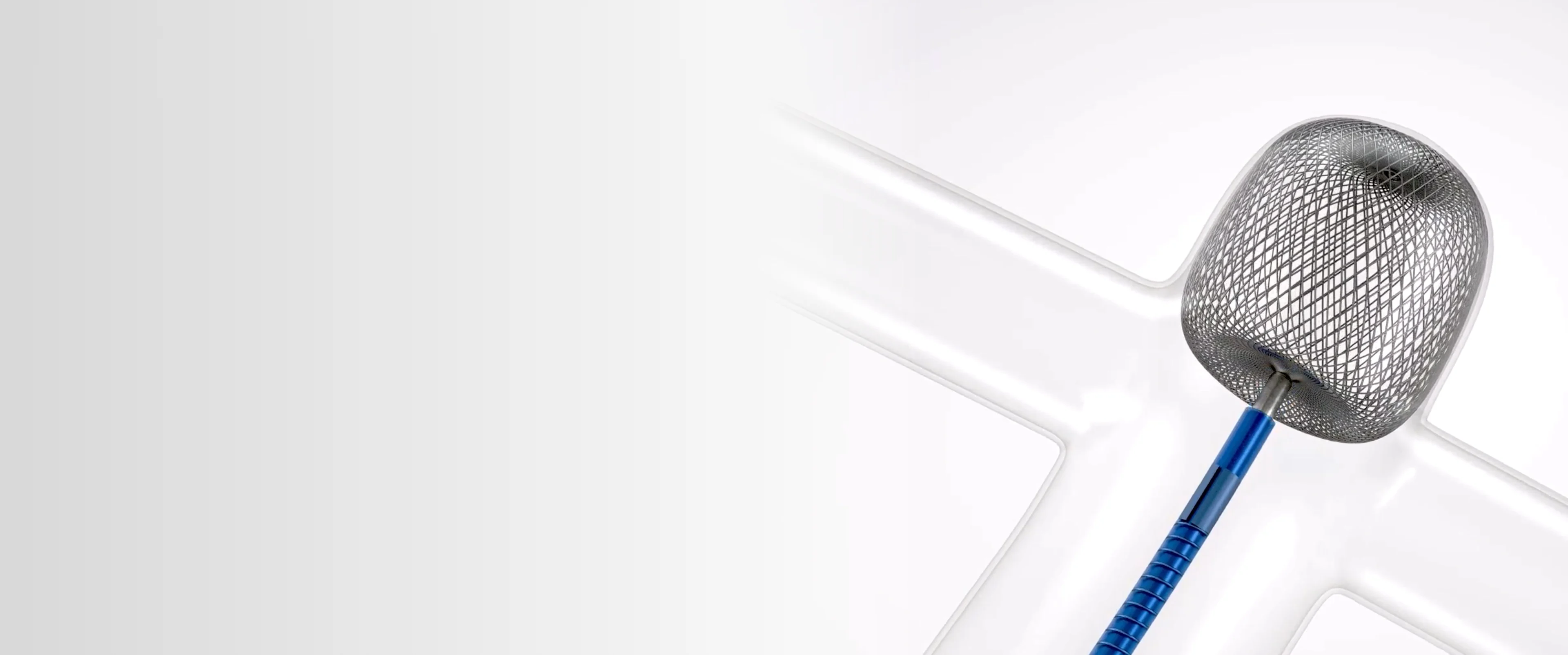
CLARYS Study:
CLinical Assessment of WEB™ Device in Ruptured aneurYSms
WEB™ Intrasaccular Embolization
"The CLARYS study has previously shown that the use of the WEB™ in the endovascular treatment of ruptured bifurcation aneurysms provides effective protection against rebleeding with a good safety profile. The angiographic occlusion rates at 1 year reported here are comparable to those already seen in previous multicenter studies which primarily included unruptured aneurysms. It may induce profound change in the endovascular management of ruptured bifurcation aneurysms."
- Patients
60
- Countries
France
- Clinical Centers
13
- Design
Single arm prospective
- Scope
Patients 18-80 y.o. with bifurcation ruptured intracranial aneurysms, H&H<4, treatable with WEB only.
- Purpose
Assessment of the clinical utility of the WEB Aneurysm Embolization System in subjects with ruptured intracranial aneurysms deemed appropriate for endovascular treatment. The population being treated in this Registry is a subset of the CE marked indication.
Endpoints
Rebleed rate after treatment during the period extending from post-procedure up to 1 month.
Definitions:
Rebleeding from target aneurysm is defined as patent evidence of hemorrhage on CT or MRI AND hemorrhage is depicted in the same territory as the initial bleeding AND hemorrhage has increased in size compare to initial pre-operative CT
Screening for rebleeding: During hospital stay of the patient and up to 1-month, any worsening of the clinical status should lead to perform a non-enhanced CT or MRI.
Or, as per-center standard care, non-enhanced CT or MRI might be performed systematically during hospital course.
Efficacy results
At 12 months:
Adequate occlusion: 87.0%
Complete occlusion: 41.3%
Retreatment: 6 (6/52=11.5%)
Safety results
At 1 month:
Primary endpoint = Rebleed rate: 0%
Morbidity (mRS>2): 15.0%
Mortality: 1.7%
At 12 months:
Morbidity (mRS>2): 9.6%
Mortality: 3.8%
Study publications
LINK TO STUDY PAGE ClinicalTrials.gov ID NCT02687607
Please refer to Instruction for Use (IFU) in the specific market/country that you are looking into:
MM1945 WW 04/26

Explore more studies
CLEVER Study: CLinical EValuation of WEB™ 0.017 Device in Intracranial AneuRysms
WEB™ Intrasaccular Embolization
French Observatory Study: WEB™ French Observatory of the WEB Aneurysm Embolization System
WEB™ Intrasaccular Embolization
Request more information
The information you provide through this form is necessary to respond to your request and may be shared with the relevant Terumo Neuro group entity or entities responsible for handling it. For more information on how we process your personal data and on your rights, please refer to our privacy notice.